Five days of phage science in Prague; reflections on the Viruses of Microbes 2026 conference
by Deus Dedit Kamya (Quadram Institute)
In July, I travelled to Prague, Czech Republic, to attend the Viruses of Microbes (VoM) 2026 conference, with support from the Centre for Microbial Interactions Flexible Funding scheme and a travel grant from the Microbiology Society. The conference was held from 6–10 July at the Hilton Prague and brought together 900 researchers from around the world, making it the largest VoM conference to date.
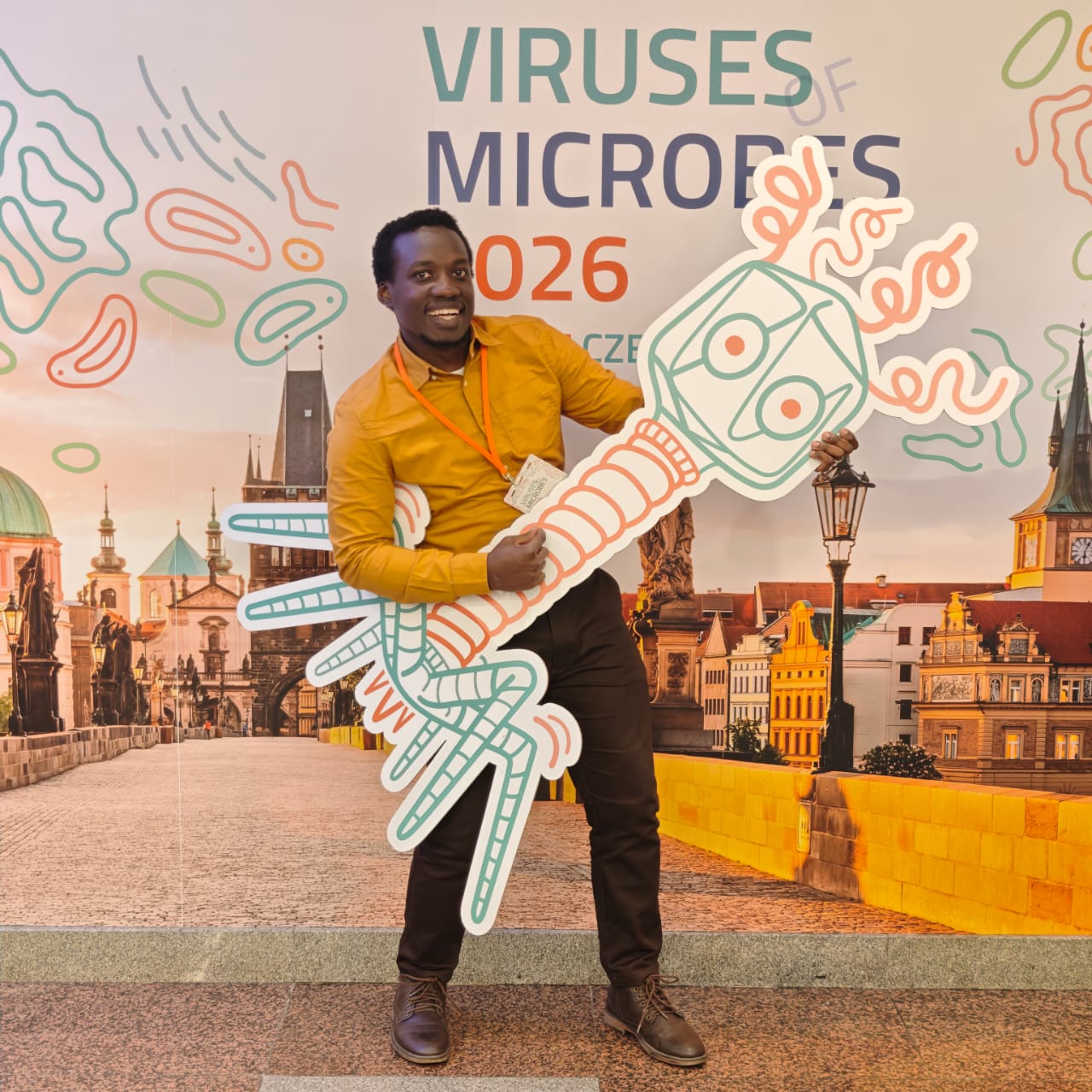
The conference is one of the major international meetings for scientists studying viruses that infect microorganisms. This includes bacteriophages – viruses that infect bacteria – which are the focus of my PhD research.
The conference opened with a keynote from Eduardo Rocha of Institut Pasteur about bacteriophages as sources of functional innovation, setting the scene for five days of discussions spanning fundamental virus biology and its applications. The programme covered a broad range of topics including virus–host interactions, phage therapy, viral ecology and evolution, bioinformatics, synthetic virology, and other applications of phages in agriculture and biotechnology.
Presenting my research on phage–Klebsiella interactions
One of the highlights of the conference was the opportunity to present part of my PhD research. My work investigates the interactions between bacteriophages and Klebsiella, an important group of bacteria that includes strains capable of causing difficult-to-treat infections.
I presented work on using Transposon Directed Insertion-site Sequencing (TraDIS) to identify bacterial genes that are important for successful phage infection. By challenging large libraries of bacterial mutants with different phages, we can identify genes whose disruption affects whether a bacterium remains susceptible to a particular phage. This is helping us understand the bacterial factors that phages depend on during infection and, importantly, how these requirements differ between phages.
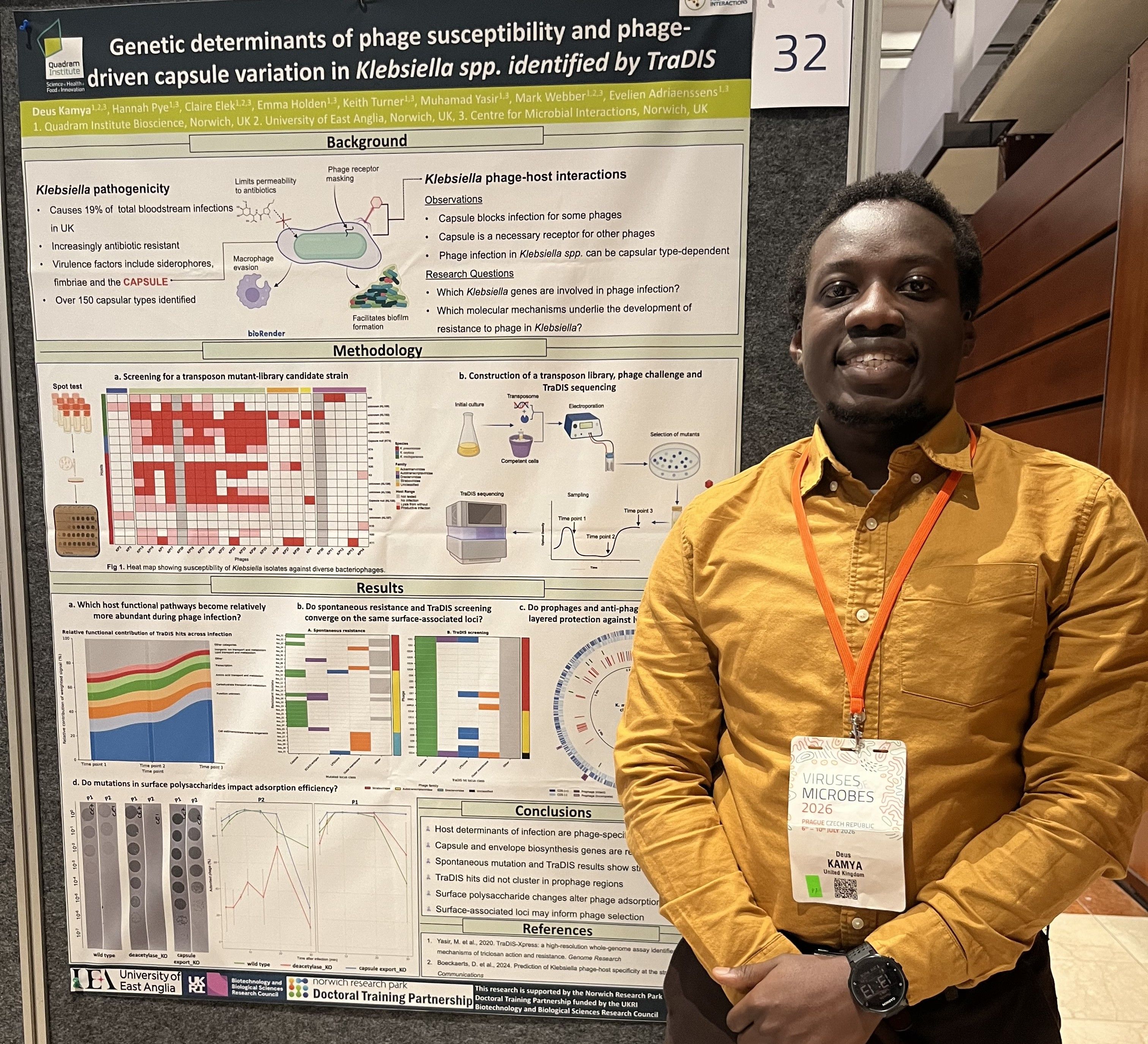
Presenting this work to an international audience was particularly valuable. Conversations around the poster allowed me to discuss the findings with researchers approaching a similar question from different perspectives, receive useful questions and feedback, and think about how some of the results could be interpreted and developed further.
From fundamental phage biology to phage therapy
One of the topics I found very interesting throughout the meeting was phage therapy. Several sessions explored the growing effort to translate bacteriophage research into treatments for bacterial infections, especially infections that are difficult to manage using conventional antibiotics. The programme included discussions of clinical experience with phage therapy, phage–antibiotic combinations, phage susceptibility testing and the challenges involved in moving phages from laboratory research towards routine clinical use.
One presentation that stood out to me was from Tristan Ferry, who shared the real-world experience of the PHAGEinLYON Clinic programme, through which over 100 patients with difficult-to-treat infections had received phage therapy. Hearing clinical experiences involving actual patients, alongside the fundamental phage biology presented throughout the conference, was a powerful illustration of how research in this field can ultimately translate into new options for patient care.
For someone working on the fundamental biology of phage infection, it was useful to see how understanding details such as phage receptors, bacterial resistance and phage–host specificity connects to the much bigger challenge of developing effective phage-based treatments. It was encouraging to see how far the field has progressed, while also hearing openly about the scientific, clinical and regulatory questions that still need to be addressed.
Putting faces to familiar names
The conference was equally valuable outside the scientific sessions. A networking dinner provided the opportunity to meet and speak with researchers from across the international phage community, including several scientists whose work I had previously encountered mainly through their publications. Being able to put faces to familiar names and have informal conversations about science, careers and possible collaborations was one of the most valuable parts of the week.
A particularly memorable part of the conference was meeting a number of African phage researchers in person. Many of us had previously interacted through online meetings and networks but had never had the opportunity to meet face-to-face. Being together in Prague gave us time to exchange ideas about our research, compare experiences of developing phage research in different settings and discuss possibilities for future collaborations. It made those online connections more tangible and reinforced the value of building a strong and connected community of phage researchers across Africa.
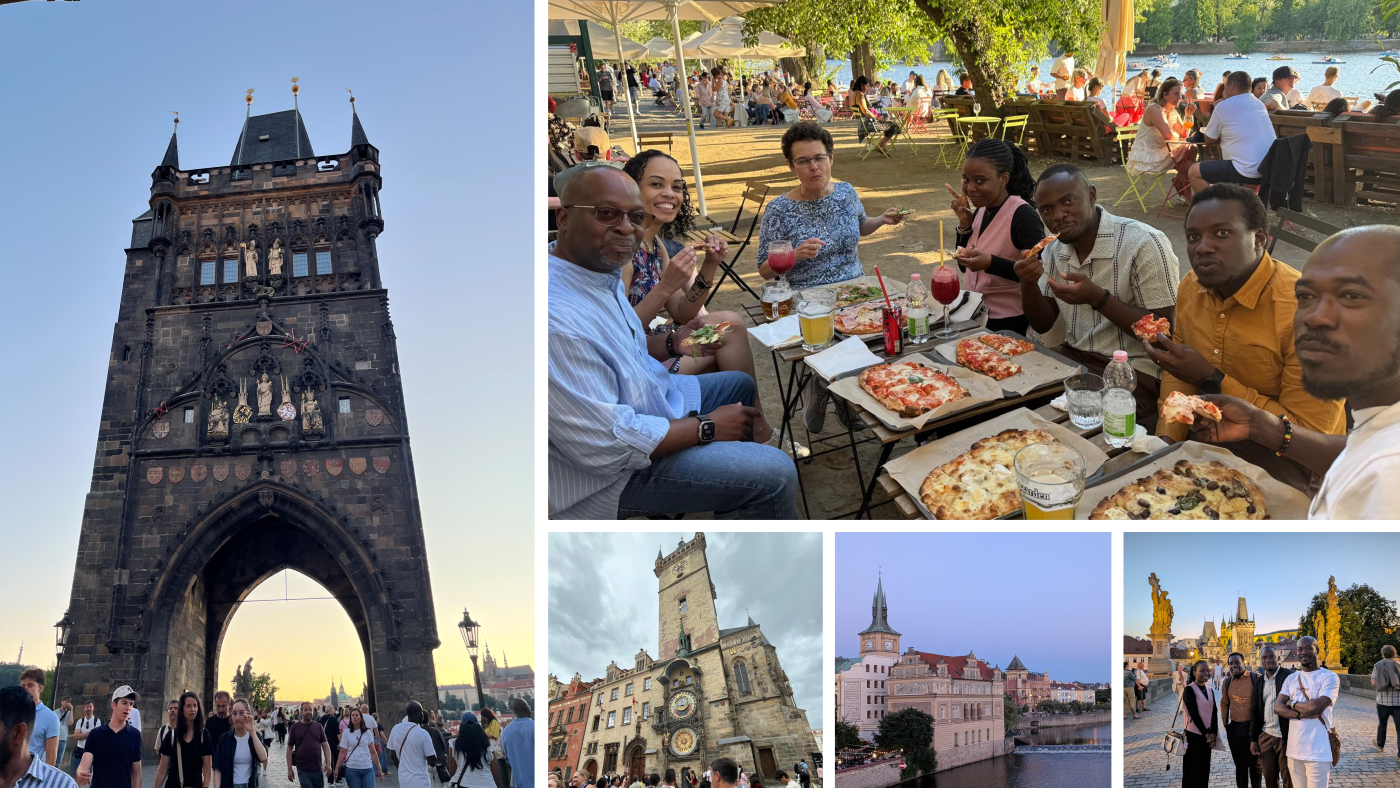
There was also time to experience Prague itself, including a boat trip on the Vltava River and visits to some of the city’s landmarks, including the Prague Astronomical Clock and Charles Bridge. These more informal moments provided another opportunity to continue conversations, make new connections and enjoy being part of a genuinely international research community.
Leaving Prague with new perspectives
Attending VoM 2026 was valuable for my professional development at an important stage of my PhD. It gave me the opportunity to present my research to specialists in my field, learn about developments beyond my immediate project, and build connections with researchers working across fundamental phage biology, biotechnology and phage therapy.
Perhaps most importantly, the conference gave me a broader view of where the phage field is heading and where my research fits within it. Speaking with researchers from different countries and at different career stages also provided valuable perspectives as I think about the next stages of my research career.
The scientific programme concluded with a keynote from Professor Karen Maxwell of the University of Toronto on the regulation and execution of anti-phage defence, providing a fitting end to a meeting that repeatedly highlighted the complexity of the evolutionary arms race between bacteria and their viruses. The conference closed with the announcement that the next meeting will take place in Lyon, France, in 2028. I left Prague with new scientific ideas, new connections and a renewed appreciation of how large, and how connected the global phage research community has become.
My attendance at VoM 2026 was supported by the UKRI Biotechnology and Biological Sciences Research Council Norwich Research Park Biosciences Doctoral Training Partnership [Grant BB/T008717/1], with additional support from the Centre for Microbial Interactions Flexible Funding Scheme and a travel grant from the Microbiology Society.