My First Major International Conference: ISME20
by Yayun Zhao (PhD Student at the University of East Anglia)
I attended the 20th International Symposium on Microbial Ecology (ISME20) in Auckland, New Zealand from 16-21 August 2026. ISME symposia are among the largest not-for-profit international meetings dedicated to microbial ecology, bringing together an average of 2,200 delegates from over 50 countries worldwide.
At the conference, I presented a poster about my PhD project, “Production, Transport and Role of DMSP in Marine Cyanobacteria.” Dimethylsulfoniopropionate (DMSP) is a major organosulfur compound in the ocean and an important precursor of dimethyl sulfide (DMS), a climate-active gas that can influence cloud formation and climate.
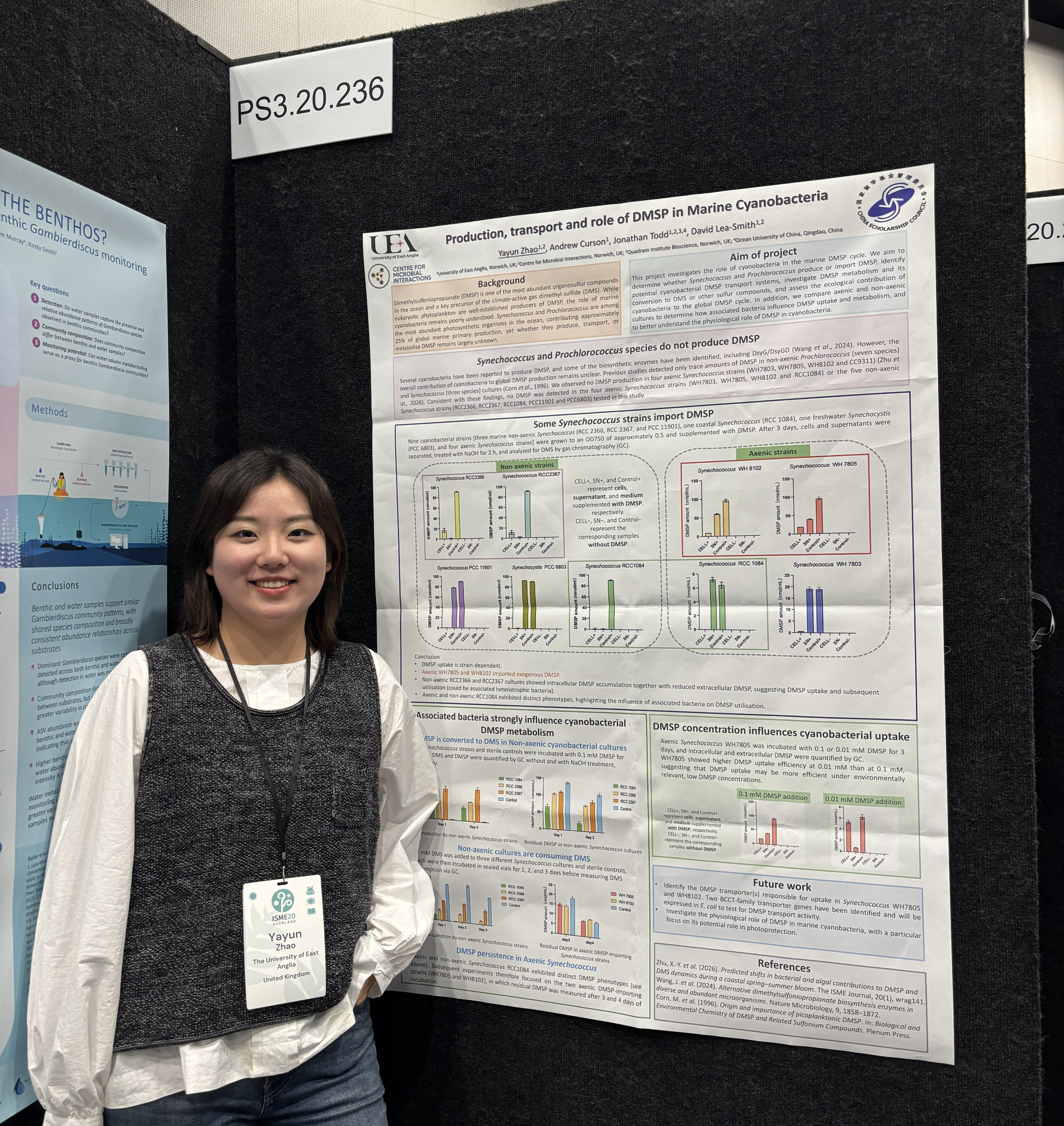
Although marine cyanobacteria such as Synechococcus and Prochlorococcus contribute approximately 25% of global marine primary production, their roles in the marine DMSP cycle remain poorly understood. This project investigates their ability to produce, transport and metabolise DMSP, as well as how associated bacteria influence these processes, to better understand the contribution of cyanobacteria to marine sulfur cycling and global climate regulation.
This was my first opportunity to attend such a large international conference, and I am truly grateful to my supervisor, Dr David Lea-Smith, and the Centre for Microbial Interactions for their support in making this experience possible.
Finding value in the basics: a new perspective on my research
I learned about the latest developments and the diversity of research in microbial ecology. Before the conference, I often felt that my research was quite basic and struggled to find solutions to some challenges beyond older papers.
However, while listening to presentations by Japanese researchers, I was surprised to discover that they were also investigating the difficulties I had encountered when isolating single colonies of axenic Synechococcus cultures. Although this was not the main focus of my PhD, it was encouraging to see that these challenges were also an active area of research. This made me realise that even basic laboratory techniques can raise important scientific questions.
After the conference, my supervisor and I spoke with one of the researchers in person. Our conversation gave me new insights and strengthened my confidence in the value of my research.
Expanding my horizons: AI in biological research
As sequencing technologies become increasingly affordable and accessible, I have started to question whether generating more data is always the best way to advance biological research. Before attending ISME20, I had limited awareness of how researchers were exploring the use of AI to gain deeper biological insights, beyond simply generating more data. I was therefore surprised and excited to discover that an entire session at the conference was dedicated to this topic.
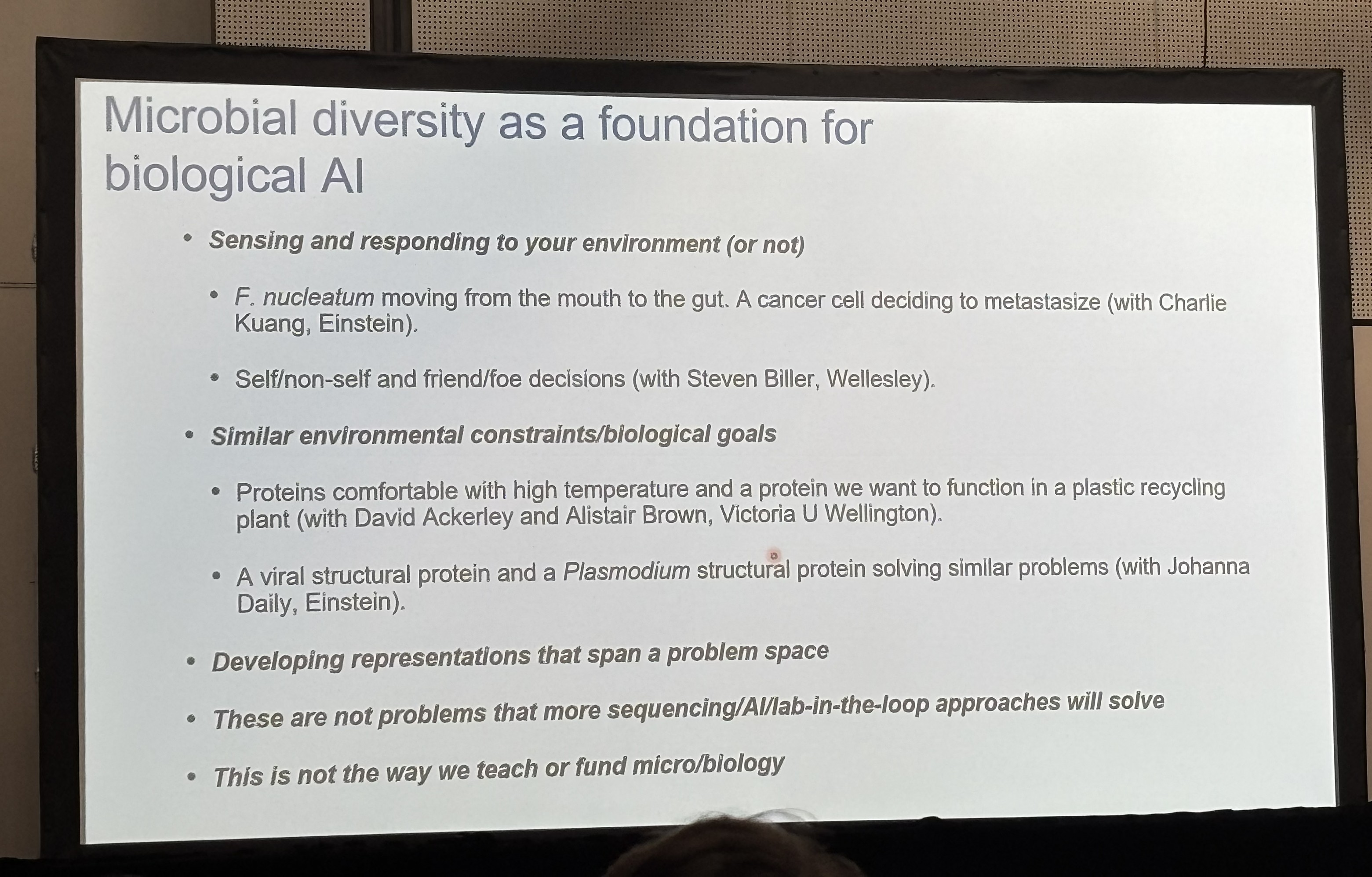
It was inspiring to see that researchers are already actively developing new approaches to address complex biological questions, rather than relying solely on generating ever-larger datasets. This opened my eyes to a research direction that I had not previously explored in depth and gave me a broader perspective on how AI could contribute to future biological research.
Beyond breakthroughs: finding meaning in research
As one of the ISME20 speakers highlighted, we should value our collaborators, stay passionate and curious, test compelling hypotheses, and make the best use of the tools available to us. These ideas reminded me that meaningful research starts with identifying important scientific questions, investigating them, and contributing to our understanding of the natural world.
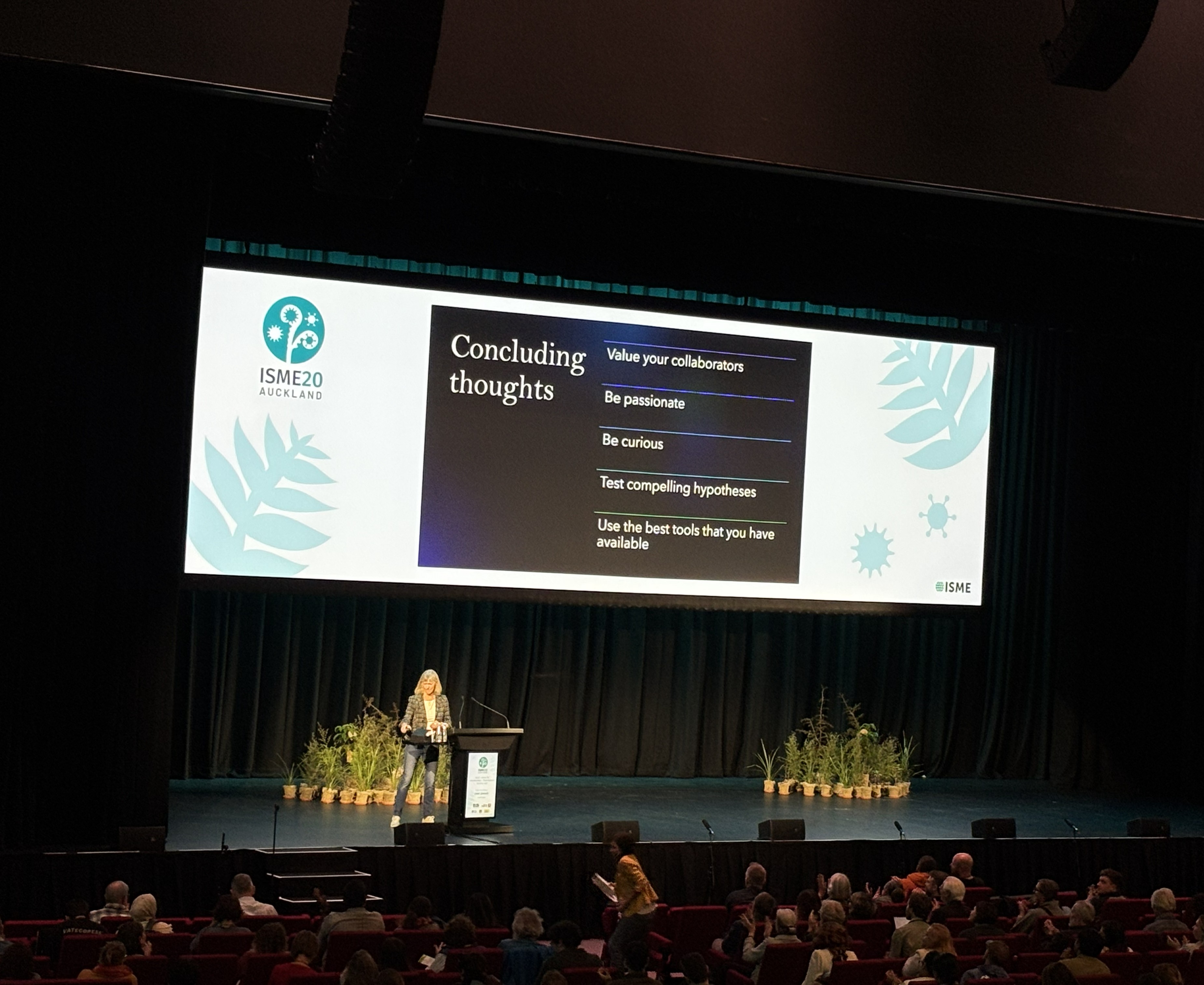
Science does not always have to be groundbreaking or complicated to be valuable. This perspective helped me appreciate the value and originality of my own research and encouraged me to move forward with greater confidence.
Last but not least, I would strongly encourage other students to attend major international conferences whenever possible, as they provide valuable opportunities to broaden our horizons, gain new perspectives, and develop a deeper appreciation for high-quality research. Besides, I also had a wonderful trip to New Zealand, and I hope I can visit again someday!