Training during your PhD: what the first year of my PhD studies taught me
by Marine Folgoas (Earlham Institute)
I’m now in the second year of my PhD in fungal genomics at the Earlham Institute. My PhD project – funded by the John Innes Foundation – focuses on understanding the infection spread, population structure, and biocontrol of wheat take-all disease, caused by the root fungus Gaeumannomyces tritici.
In January 2026, I had the opportunity to participate in the Workshop on Genomics organised by Evomics in Český Krumlov, Czechia. This intensive workshop covered essential methods in modern genomics, including sequencing data analysis, genome assembly, annotation and alignment. It brought together researchers (PhDs, postdocs, PIs) from around the world.
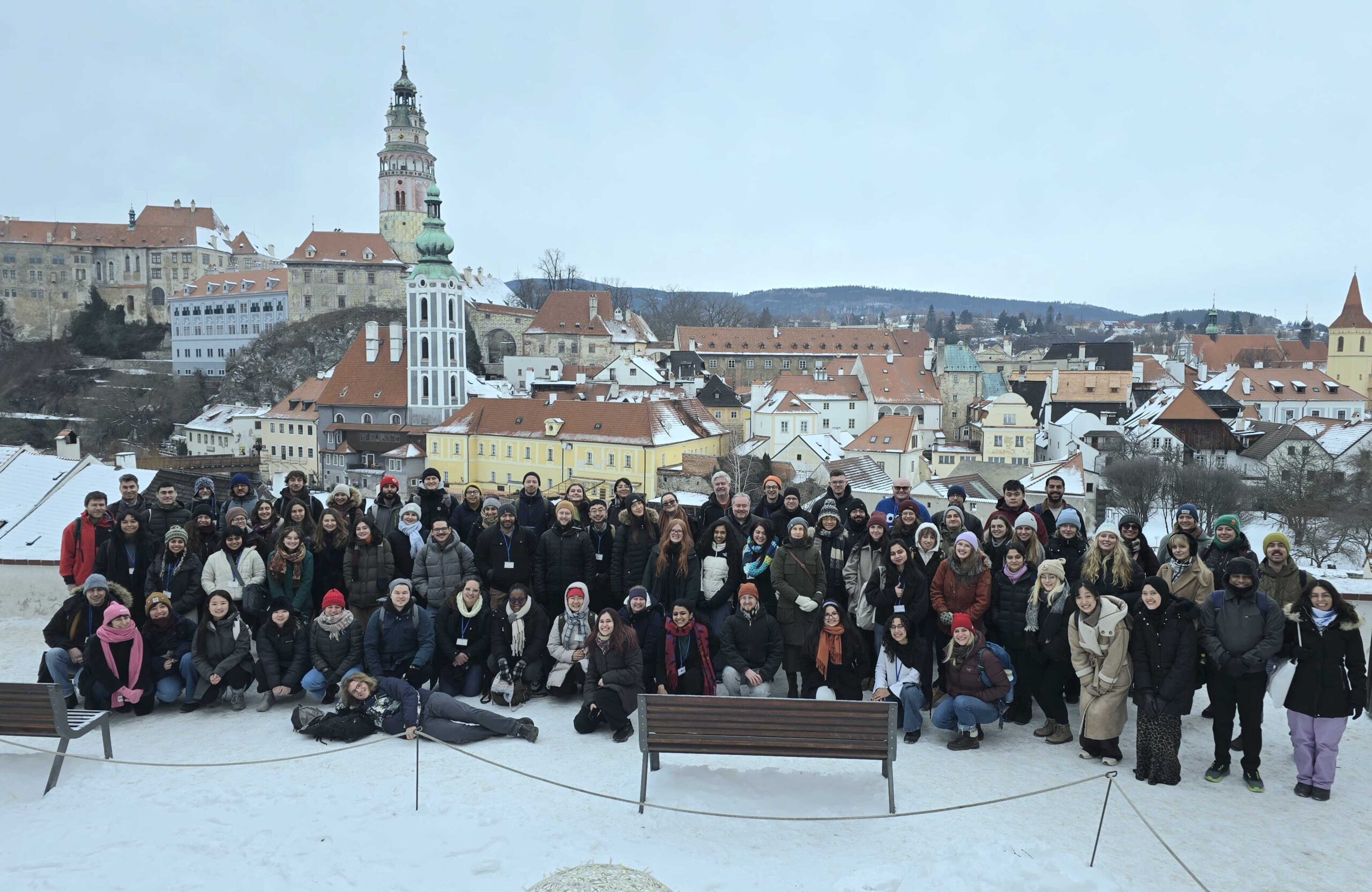
This workshop was both challenging and stimulating. The fast pace enabled me to expand my knowledge quickly and gain practical experience with tools (software, scripts etc) that I could use in my own project.
Beyond the technical skills, the exchanges with other attendees and the instructors were highly enriching, and allowed me to make new connections whilst expanding my understanding of the field.
Why is training essential in your first year?
The first year of a PhD is a good moment to consolidate knowledge and learn lots of new things, whilst launching your research project. This should give us all the tools and skills we need to conduct research successfully in the following years.
I think it’s impossible to know everything before you start a PhD. But, that’s also what makes it so interesting: we are making progress with our project, but above all we are learning a great deal through training and our research.
Before starting my PhD, I already had laboratory skills in molecular biology and genetics thanks to my studies at the Polytech Clermont engineering school in France. Through two internships at QGG, Aarhus University, Denmark, and Limagrain, France, I also acquired strong skills in statistics and bioinformatics (R, Python). These skills gave me a solid foundation for my initial research.
Identifying the gaps
At the beginning of your PhD, you arrive with a general set of skills. But as the months go by, your needs become clearer: you then need to identify more specialised training courses that are directly related to your project. It is this transition from the general to the specific that really structures your progress in the first year.
As my PhD project was quite broad and multidisciplinary, I quickly realised that it required skills that I had not yet had the opportunity to fully develop. For example, I had never done any fieldwork or conducted laboratory experiments involving plants in plots or soil samples.
Similarly, certain aspects of genomics, such as genome assembly, alignment, and RNA-seq analysis, were still relatively new to me, as my degrees in France had focused more generally on biological engineering.
I had already carried out statistical analyses before, but never population genomics, which constitutes an entire chapter of my thesis. Although reading papers is a good starting point, nothing replaces hands-on training to truly understand and apply these methods to your own research, which is what this workshop in the Czechia provided.
Important skills for doctoral studies
Depending on the project and degrees obtained, the skills required during a PhD can vary considerably. The most important thing is to be able to identify them, early, through conversations with your supervisors, colleagues in your group, and other PhD students.
But technical skills are not the only ones to develop during a PhD. Knowing how to discuss science, present your results and exchange ideas with other researchers is just as essential. These skills can be acquired through training, but also simply by practising.
For example, I had the opportunity to present my work in different contexts during my first year: within my research group, at a student symposium, to the Plant Genomics group at the Earlham Institute, and to the public within the Microbe Zoo exhibit at Norwich Science Festival.
Financing your training
Cost can be a barrier to accessing certain training programmes, particularly abroad. Fortunately, there are several options available including from societies, charities and other grants.
To help fund my trip to Czechia, I contacted the Centre for Microbial Interactions (CMI). Their flexible funding scheme awarded me £500 to cover part of the costs.
I also applied for the Genetics Society Training Grant, which supports PhD students and early-career researchers to attend training courses and conferences. They awarded me £1,200 to attend the workshop, and without both of these grant opportunities this training abroad would not have been possible.
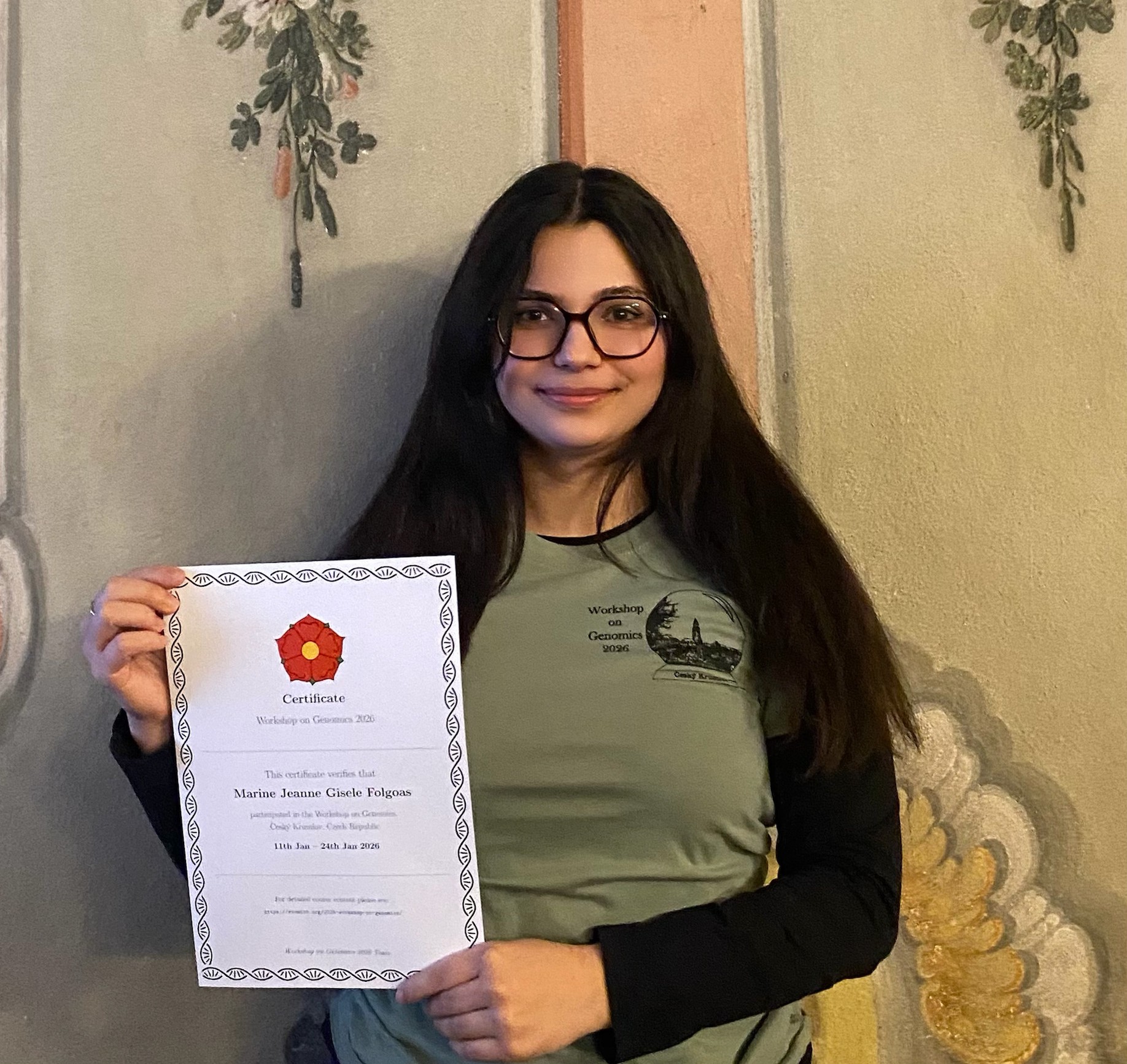
Applying for these grants was also a learning experience: it required me to write a concise summary of my PhD project, to justify the relevance of the training, and in some cases to provide a detailed budget. All these skills will be useful for a career in research.
I would like to extend my warmest thanks to both CMI and the Genetics Society, whose support enabled me to undertake this highly enriching training in the Czechia!
If I had to give one piece of advice to a PhD student starting out: draw up a list of the key skills required for your project right from the start, and identify which ones you’ve already mastered and which ones you still need to develop. It’s a simple starting point, but a very effective one! Tip: Start looking for funding sources well in advance of your application, as the approval process can take a long time.